
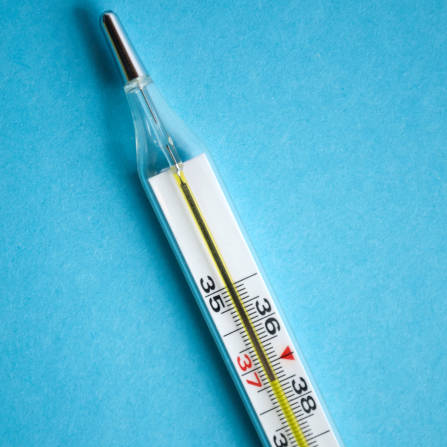
173 Healthcare: Mercury Safety

Modules:
1
Hours:
0.5
Sectors:
Healthcare
Target Audience:
Employee
Fee

Description

Description
Mercury may be fatal if inhaled and harmful if absorbed through the skin. It is especially harmful to healthcare workers during the repair of broken thermometers and sphygmomanometers.

This course takes a closer look at the healthcare industry and how workers can protect themselves from potential health hazards from mercury.

Free Access
As an OSH Center student, you have free access to all our training materials, including knowledge checks and course activities. Documentation of your training—such as exam scores, certificates, and transcripts—can be accessed by purchasing a certificate package.

Course Objectives
At the end of this course, you should be able to:

ID Objective
TO 1.0 Achieve a minimum score of 70% on the final course assessment.
LO 1.1.1 Describe what mercury is and its primary uses in the healthcare industry.
LO 1.1.2 Identify the most common route of exposure to mercury and the factors that determine toxicity.
LO 1.1.3 Describe the acute and chronic health effects of exposure to mercury.
LO 1.1.4 Describe how exposure to mercury is controlled using the “Hierarchy of Controls” and give examples of each control method.
LO 1.1.5 Identify OSH Center requirements for exposure to mercury in the workplace.
LO 1.1.6 Discuss mercury spill cleanup procedures and the PPE necessary to protect employees during the task.
LO 1.1.7 Describe the advantages of using mercury-free equipment in health care.

Key: Terminal Objective (TO), Learning Objective (LO)

Key Topics
  • ✔ Mercury Hazards
  • ✔ Occupational Exposure to Mercury
  • ✔ Mercury Health Effects
  • ✔ Hierarchy of Controls
  • ✔ OSH Center Mercury Exposure Requirements
  • ✔ Mercury Alternatives
  • ✔ Mercury-Free Healthcare

Testimonials

Related Courses

Get in Touch Today

Contact us for course details, business discounts, or certification support.

Scroll to Top